Creative technology
OpenAI Expands Model Access as Unwanted AI Imagery Triggers…
OpenAI has announced that it is providing 100,000 academic researchers with free access to its most advanced ChatGPT models to support scientific research and discovery. At the same time, platforms face public pushback regarding AI-generated visuals. Google rolled back a Google Earth feature after only one day when text prompts allowed users to generate realistic deepfake satellite imagery. Elsewhere, users across platforms such as Amazon, Reddit and Tinder reported unwanted AI image generation without consent, whilst a Minnesota court upheld a ban on image-manipulation software. Meanwhile, OpenAI highlighted its European governance and provenance practices as the EU AI Act advances. For independent painters and visual creators, these concurrent shifts highlight both the growing accessibility of advanced software tools and an increasing market demand for verified provenance, original hand-crafted art and authentic online visual representation.
The signal
OpenAI has announced that it is providing 100,000 academic researchers with free access to its most advanced ChatGPT models to support scientific research and discovery. At the same time, platforms face public pushback regarding AI-generated visuals. Google rolled back a Google Earth feature after only one day when text prompts allowed users to generate realistic deepfake satellite imagery. Elsewhere, users across platforms such as Amazon, Reddit and Tinder reported unwanted AI image generation without consent, whilst a Minnesota court upheld a ban on image-manipulation software. Meanwhile, OpenAI highlighted its European governance and provenance practices as the EU AI Act advances. For independent painters and visual creators, these concurrent shifts highlight both the growing accessibility of advanced software tools and an increasing market demand for verified provenance, original hand-crafted art and authentic online visual representation.
What matters
Key points from this story
- 01
OpenAI is offering free access to advanced ChatGPT models for 100,000 academic researchers to accelerate scientific discovery.
- 02
Google pulled its AI satellite editing feature in Google Earth after one day due to concerns over text-prompted deepfakes.
- 03
Rising public friction around unwanted AI images on platforms like Amazon and Reddit emphasises buyer demand for visual transparency.
- 04
Tech policy efforts, including the EU AI Act, are driving stronger emphasis on image provenance and safety governance.
- 05
Independent painters can use AI for administrative drafting and cataloguing while keeping artwork visuals unmanipulated.
Put it into practice
What artists can do now
Audit your online painting listings to ensure physical dimensions, materials, and canvas details are fully accurate.
Use accessible conversational AI tools to assist in drafting clear, concise artwork descriptions and studio stories.
Provide high-resolution, unedited photos of your paintings alongside realistic room mockups to build buyer trust.
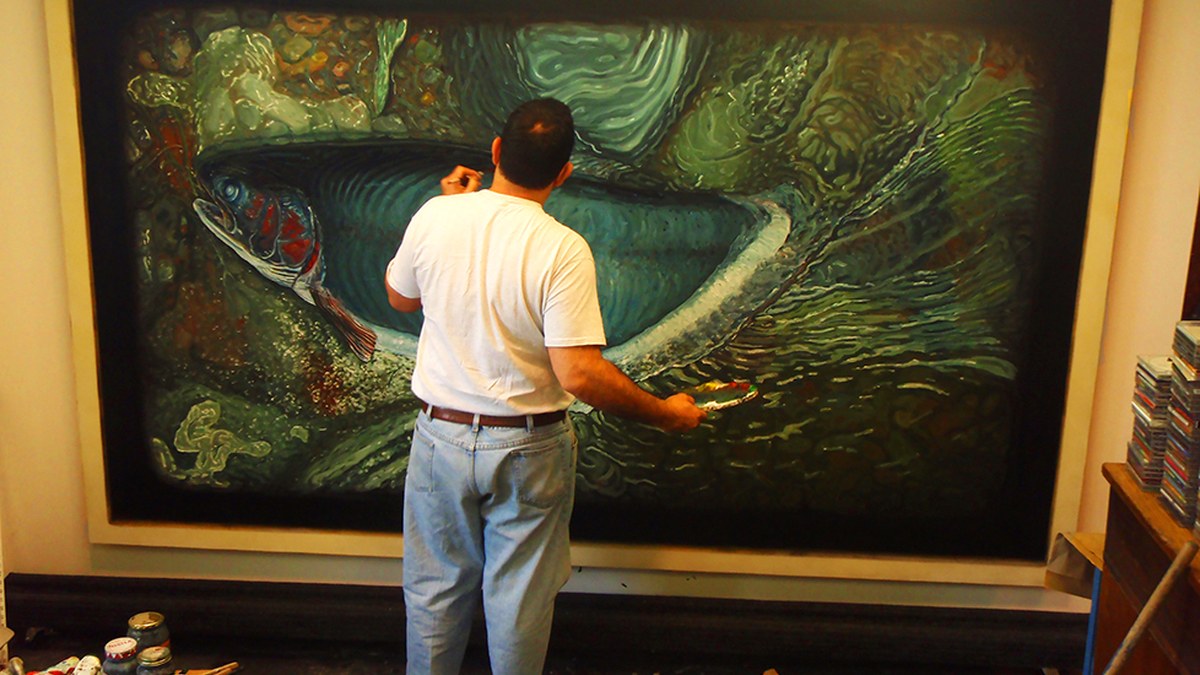
Document your manual painting process with studio photography to provide clear provenance for collectors.
Story topics
Keywords and themes
Source transparency
Sources and further reading
Creator Radar links to the material used to understand this story. External pages open in a new tab.
Continue reading