
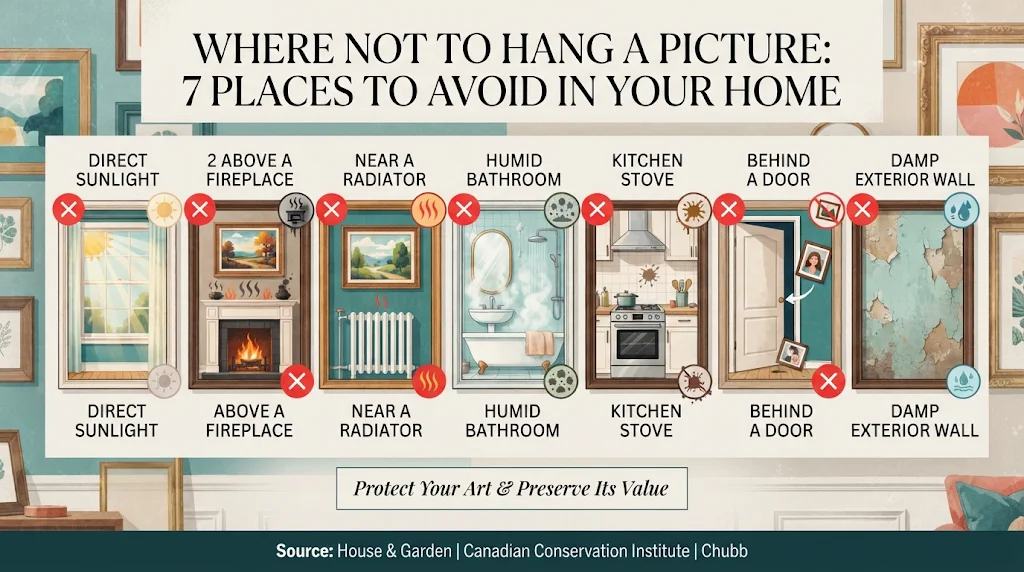
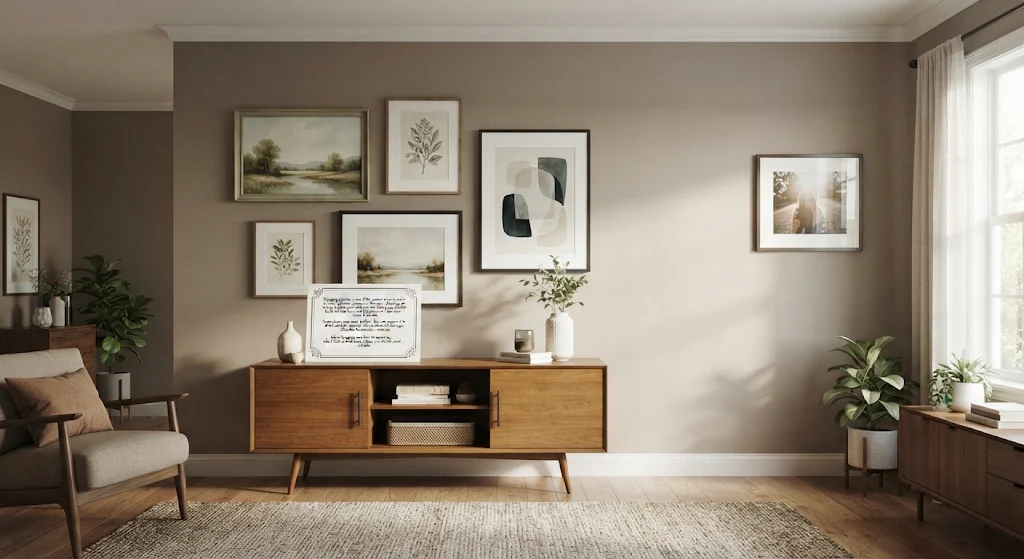
Hanging pictures is one of the easiest ways to make a house feel more personal and beautifully decorated. The right artwork can add character, introduce color, create a focal point, and make an empty wall feel complete. However, choosing the wrong location can affect not only how a picture looks but also how well it is preserved over time. House & Garden
Some places may seem perfect for displaying artwork but can expose it to direct sunlight, moisture, heat, or accidental damage. Others simply make a picture look out of place or prevent it from receiving the attention it deserves. Canadian Conservation Institute
Before hanging your favorite painting, photograph, or decorative print, take a look at these seven places you should avoid and discover where to display your artwork instead. Chubb
1. Directly in Front of a Sunny Window
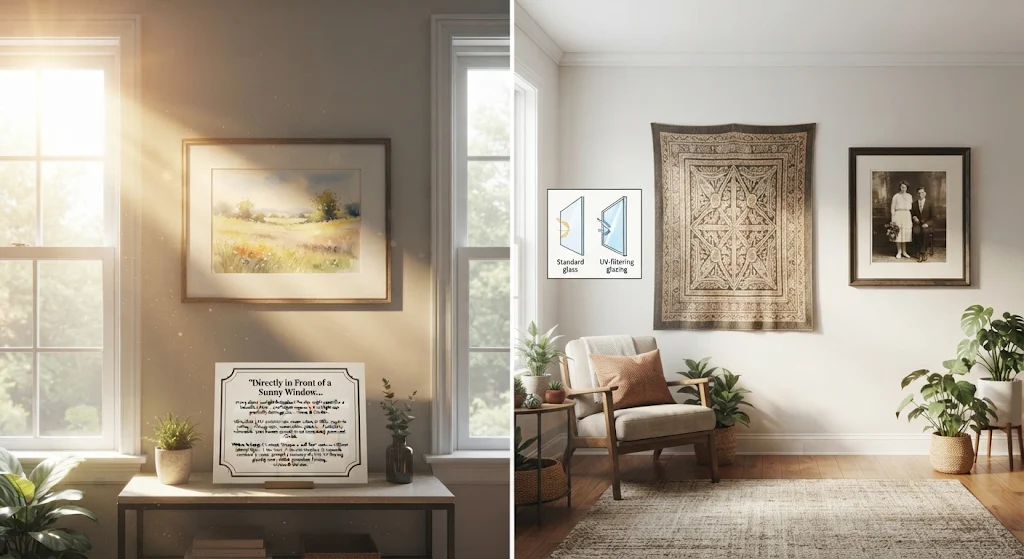
A wall that receives strong direct sunlight throughout the day might seem like a beautiful place to display artwork. Natural light makes interiors feel bright and welcoming, but prolonged exposure to sunlight can gradually damage pictures. House & Garden
Ultraviolet (UV) radiation can cause colors to fade, paper to yellow, and certain materials to deteriorate. Photographs, watercolors, posters, and artworks made with delicate pigments can be particularly vulnerable. Even framed artwork is not completely protected from the effects of sunlight. Chubb
Where to hang it instead:
Choose a wall that receives indirect natural light rather than strong direct sunshine. If the artwork is valuable or particularly sensitive, consider UV-filtering glazing and suitable protective framing. Remember that even UV-protective glass cannot eliminate all light-related damage. House & Garden
2. Above a Frequently Used Fireplace
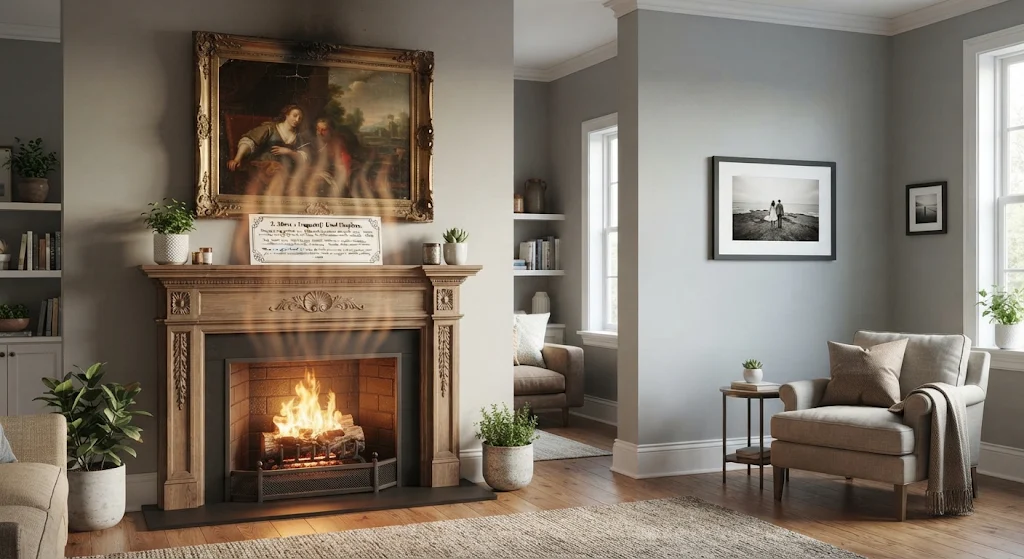
Hanging a large painting above a fireplace is a popular decorating choice because it creates an attractive focal point in the living room. However, a working fireplace is not always the safest environment for valuable artwork. Chubb
Heat, smoke, soot, and changing humidity levels can affect paintings, photographs, frames, and other decorative pieces. Repeated exposure may contribute to fading, deterioration, and damage to delicate materials. Canadian Conservation Institute
Where to hang it instead:
If you love the look of artwork above a fireplace, consider a decorative print or an inexpensive reproduction rather than an original or valuable painting. For treasured pieces, choose another wall away from the heat and smoke. Chubb
3. Directly Above a Radiator or Air Conditioning Vent
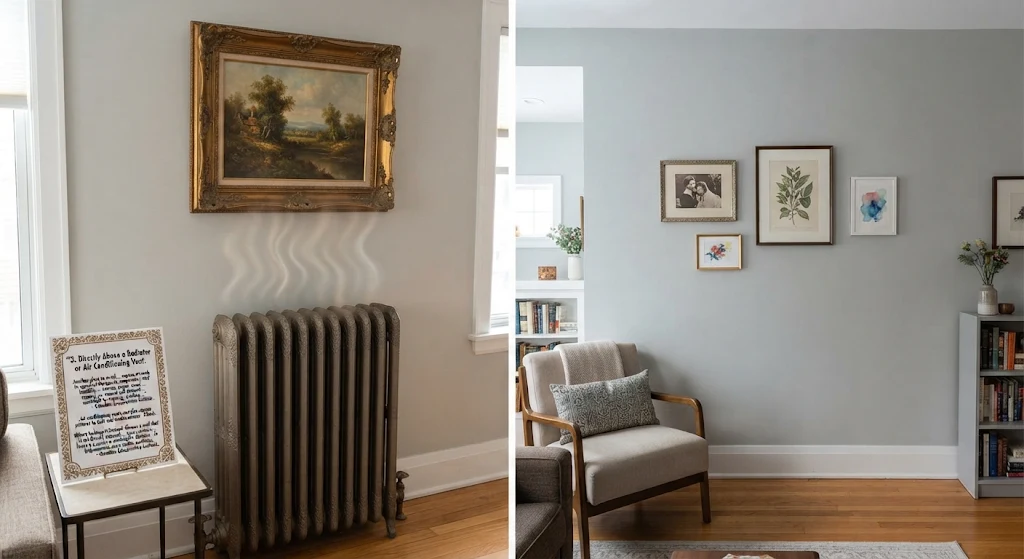
Another place to avoid is directly above a radiator, heater, or air conditioning vent. These locations expose artwork to repeated changes in temperature and humidity, which can affect the materials used in paintings and frames. Canadian Conservation Institute
Canvas, paper, wood, and other materials can expand and contract as environmental conditions change. Over time, these fluctuations may contribute to warping, cracking, loose canvas, or other forms of deterioration. Air conditioning vents can also expose pictures to dust and condensation. Chubb
Where to hang it instead:
Choose a wall that is not directly exposed to heating or cooling airflow. If possible, leave a comfortable distance between artwork and any heating equipment to help maintain more stable conditions. Canadian Conservation Institute
4. In a Bathroom With Frequent Steam and Humidity
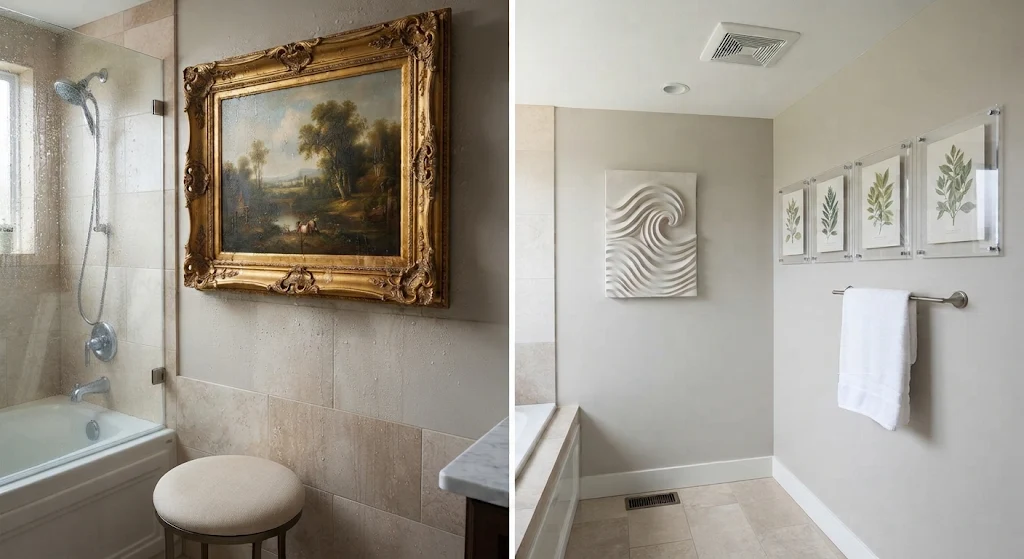
Bathrooms can be tempting places to hang pictures, especially when you want to make the room feel more stylish and less empty. A framed print above a bathtub or beside a mirror can look beautiful, but frequent exposure to steam and moisture can create problems for certain types of artwork. House & Garden
High humidity and sudden changes in moisture levels can affect paper, canvas, wooden frames, and adhesives. In particularly damp conditions, mold and other moisture-related damage may also become a concern. Chubb
Where to hang it instead:
For bathrooms, choose moisture-resistant decorative options such as properly sealed metal artwork, ceramic wall decorations, or prints with suitable protective framing. Keep valuable original paintings and delicate photographs in rooms with more stable environmental conditions. House & Garden
5. Near the Kitchen Stove or Cooking Area
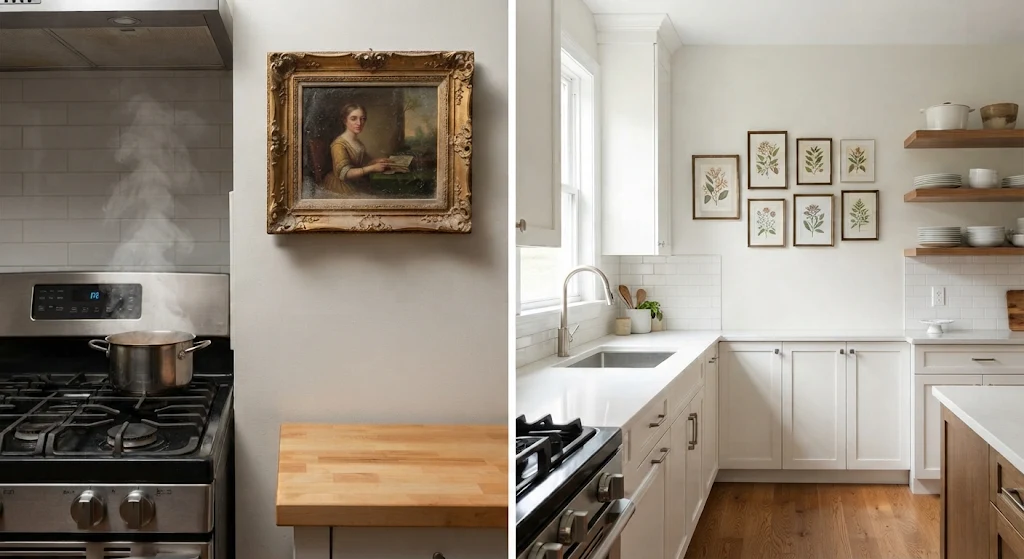
The kitchen is another location where you should think carefully before displaying valuable artwork. Although pictures can make a kitchen feel warmer and more inviting, hanging them close to the stove or food preparation area can expose them to cooking grease, smoke, steam, and airborne particles. Canadian Conservation Institute
Over time, these substances can accumulate on frames and artwork surfaces, making them difficult to clean without causing damage. Heat and moisture from cooking can also affect sensitive materials. Chubb
Where to hang it instead:
If you want artwork in your kitchen, choose a wall away from the stove, sink, and cooking appliances. Framed prints with protective glazing or easy-to-clean decorative pieces are generally more practical choices than delicate original artwork. House & Garden
6. Behind Doors and in Narrow, Busy Hallways
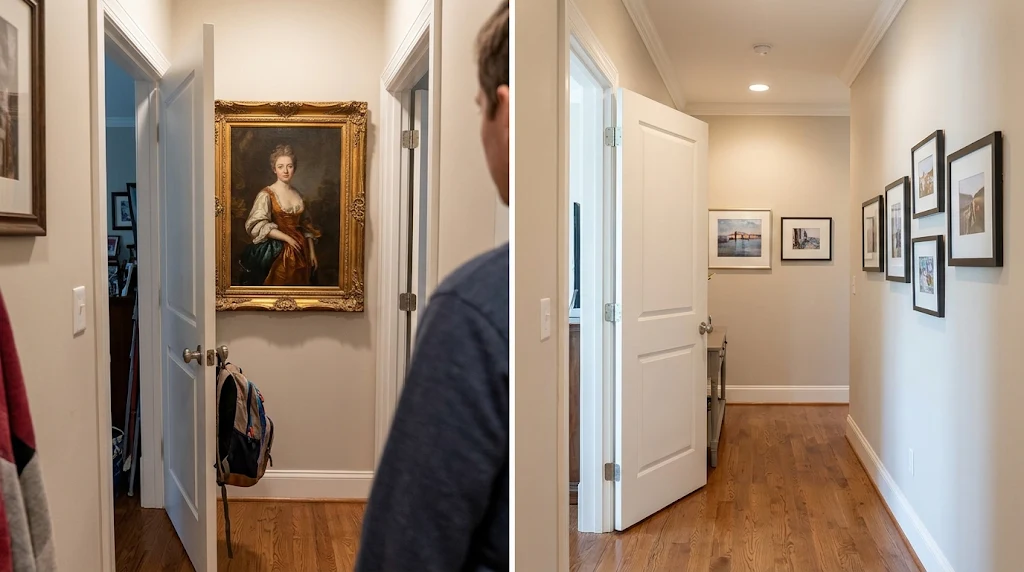
Not every unsuitable location puts artwork at risk because of light, heat, or humidity. Sometimes the problem is simply that the picture can easily be knocked, scratched, or damaged. Canadian Conservation Institute
Hanging pictures behind frequently opened doors, in narrow passageways, or close to furniture that moves regularly increases the possibility of accidental contact. Bags, chair backs, hands, and other everyday objects can damage frames and even tear canvases. Chubb
Where to hang it instead:
Choose a wall where people can comfortably walk past without brushing against the artwork. In narrow hallways, position smaller pictures carefully and make sure they do not interfere with doors, furniture, or everyday movement. Canadian Conservation Institute
7. On Damp or Poorly Insulated Exterior Walls
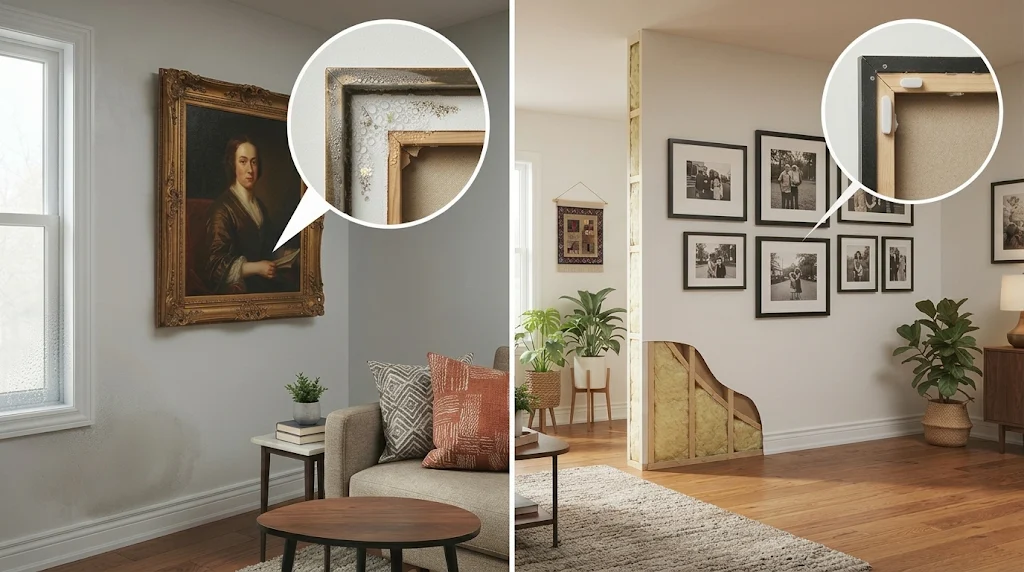
A wall may look perfectly dry and still be an unsuitable place for valuable artwork. Exterior walls can become colder than interior walls, particularly during winter, which may encourage condensation behind a picture or frame. Canadian Conservation Institute
If moisture becomes trapped between the wall and the artwork, it can contribute to mold growth, staining, and deterioration. This is particularly important for canvas paintings, photographs, and works on paper that are sensitive to environmental changes. Chubb
Where to hang it instead:
Whenever possible, choose an interior wall with stable conditions. If you need to display artwork on an exterior wall, make sure the wall is properly insulated and dry. Appropriate backing boards and spacers can also help create air circulation behind certain framed works. Canadian Conservation Institute
How to Choose the Best Place for a Picture
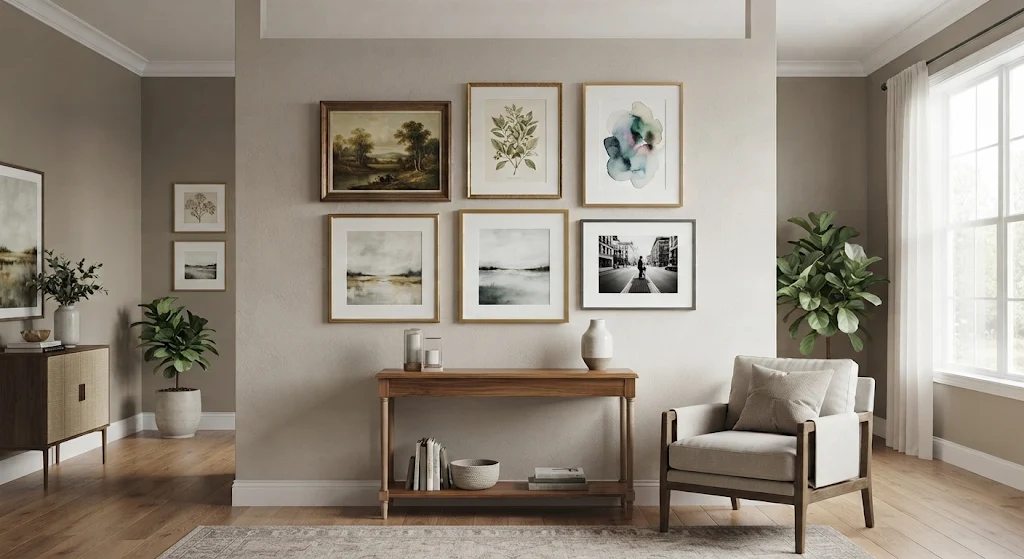
Once you know which locations to avoid, choosing the right wall becomes much easier. A good display location should protect the artwork while also allowing it to complement the furniture, colors, and overall design of the room. House & Garden
Here are a few simple things to consider before hanging a picture:
Check the lighting: Avoid walls exposed to direct sunlight for long periods, especially when displaying original artwork or photographs. Chubb
Keep it away from heat: Avoid radiators, fireplaces, heating equipment, and air conditioning vents. Canadian Conservation Institute
Avoid moisture: Choose rooms and walls with stable humidity and no signs of dampness. Chubb
Consider everyday movement: Make sure the picture will not be hit by doors, furniture, or people walking past. Canadian Conservation Institute
Think about the room's design: Select a wall where the artwork can become part of the interior rather than competing with other decorative elements. House & Garden
Use suitable framing: Valuable photographs and artwork on paper may benefit from conservation-quality materials and protective glazing. Chubb
Final Thoughts
Hanging a picture in the right place can make a significant difference to the appearance of your home. However, a beautiful wall is not necessarily a safe location for every type of artwork. Direct sunlight, heat, humidity, cooking fumes, and busy walkways can all create problems that are easy to overlook. Canadian Conservation Institute