
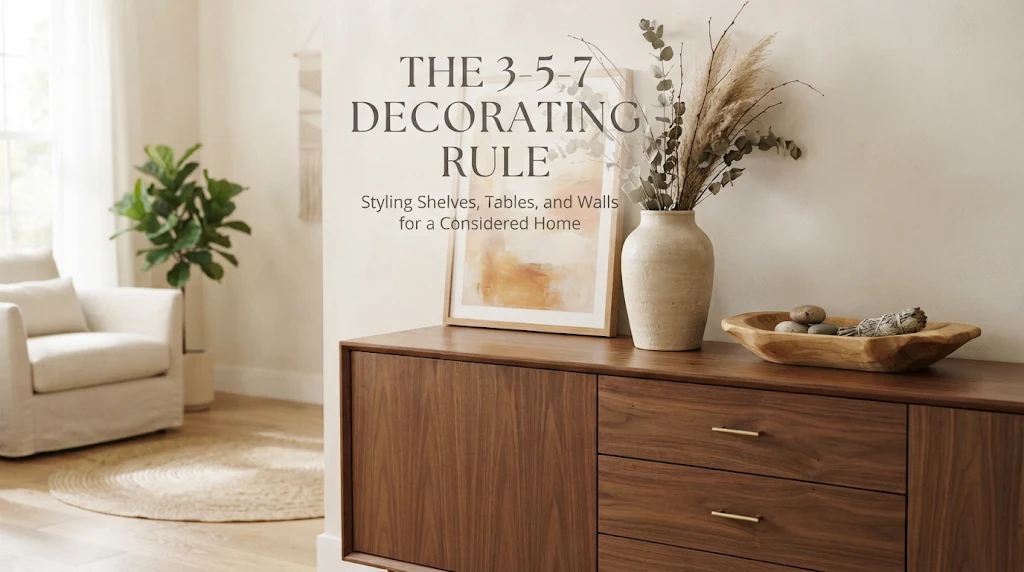
A simple way to style shelves, coffee tables and walls so your room feels more considered.
What is the 3-5-7 rule for decorating?
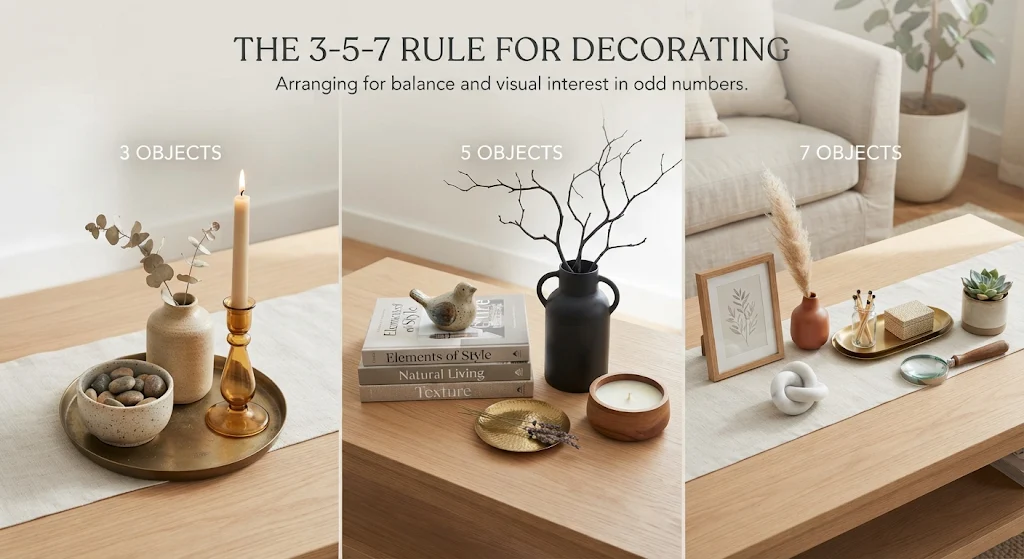
The 3-5-7 rule is a simple interior styling guideline: arrange decorative objects in odd-numbered groups of three, five or seven. Instead of lining up matching pairs, you create a small arrangement with different heights, shapes or textures. The result can feel more relaxed and visually interesting, while still looking intentional. (Ideal Home; Homes & Gardens)
You might use three objects on a bedside table, five pieces across a mantel or seven smaller items across a long bookshelf. The numbers are starting points, not instructions to fill every surface. Choose the number that suits the space and stop when the arrangement looks balanced. (Ideal Home; Homes & Gardens)
Why do odd-numbered groups work?
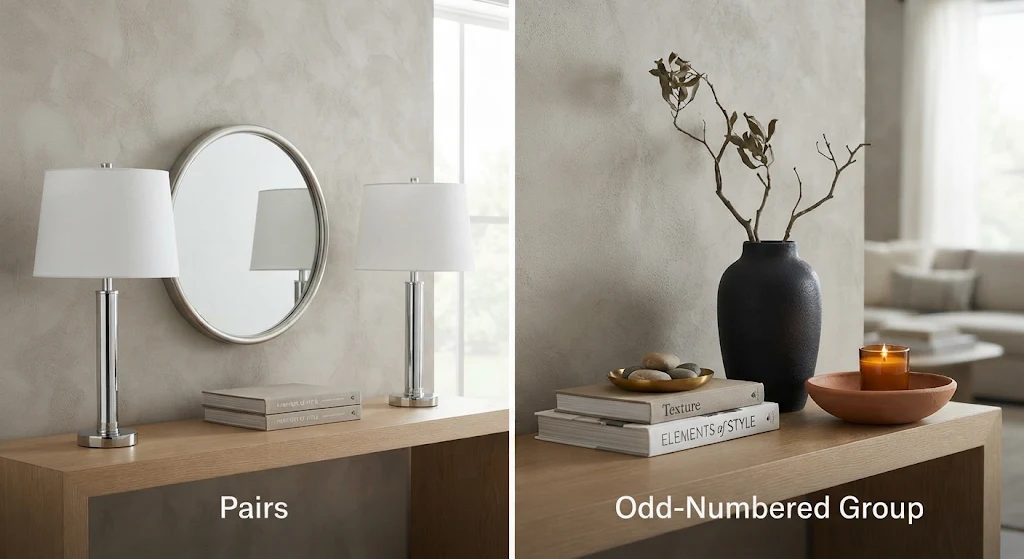
Pairs often create a neat, symmetrical look. That can be exactly right when you want a calm, formal feel, such as matching lamps on either side of a bed. An odd-numbered group is less likely to look mirrored. It encourages the eye to move between the objects and makes it easier to create a focal point. (Livingetc; Ideal Home)
The number alone does not make a display work. Three identical objects in a straight line can still look flat, while seven unrelated items squeezed together can look cluttered. Vary height, scale and texture, repeat a colour or material to connect the pieces, and leave some empty space around them. (Homes & Gardens; Ideal Home)
How to use the 3-5-7 rule around your home
1. Start with three objects on a coffee table
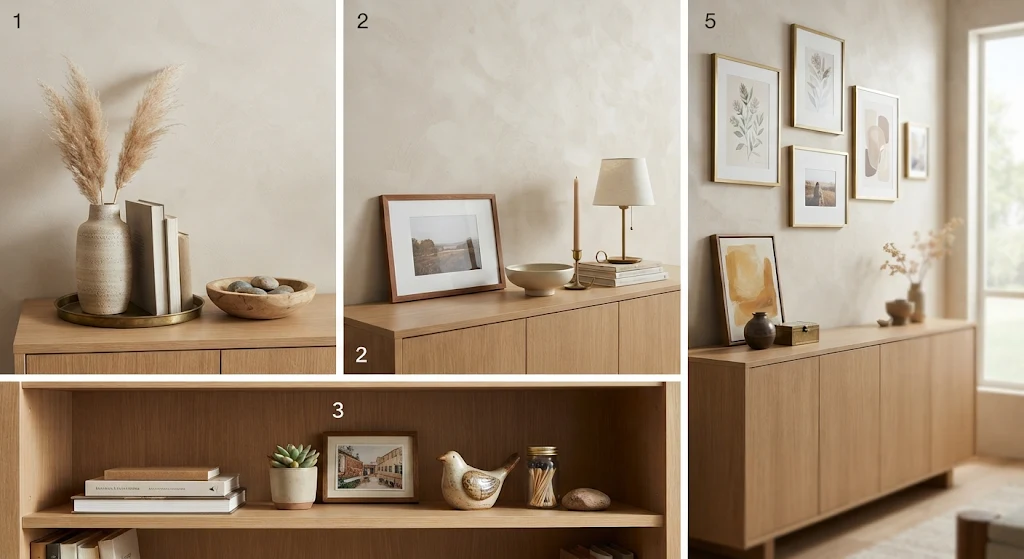
Choose one taller object, one medium-height piece and one low item. For example, try a small vase, a stack of two favourite books and a shallow bowl. Keep the group slightly off-centre rather than placing everything in a straight row. If you use a tray, it can help the objects read as one arrangement. (Ideal Home)
2. Style a console or mantel with five pieces
A longer surface can take a little more variety. Try a framed photograph, a small lamp, a candle, a bowl and a short stack of books. Let one item sit slightly forward and another sit further back to create depth. Repeat one detail—such as warm wood, brass or a soft neutral colour—so the display feels connected. (Ideal Home; Homes & Gardens)
3. Use seven smaller items across a bookshelf
On a wide bookcase, seven objects can be spread across several shelves rather than crowded into one cluster. Mix books with a small plant, a framed picture, a ceramic piece or a keepsake. Leave gaps between groups so the shelves do not become a continuous line of things. (Ideal Home; Homes & Gardens)
4. Bring artwork into the arrangement
A framed painting or print can give a display a clear focal point. Lean a small artwork against the wall at the back of a console, then place two complementary objects in front or beside it. For a larger shelf, use a painting as the anchor and build a group of five around it with books, a vase and a small decorative object. (Ideal Home; Homes & Gardens)
Think about the colours already in the room. A landscape with warm ochre tones might pick up the colour of a wooden frame or cushion. A blue abstract could connect with a ceramic bowl or a throw. You do not need every item to match; repeating one or two colours is often enough. (Homes & Gardens)
5. Try an odd-numbered gallery wall
The same idea can help when arranging framed pieces. Start with three artworks in different sizes, or build a larger arrangement with five or seven frames. Lay them out on the floor first and photograph the arrangement before hanging. Keep a shared element—such as a frame finish, subject or colour palette—so the collection feels cohesive. (Homes & Gardens; Livingetc)
Odd numbers are not compulsory here. Two larger pieces can look beautifully balanced side by side, and a symmetrical pair may suit a formal room. Use the rule as a way to explore a layout, not as a reason to replace an arrangement you already love. (Ideal Home)
A quick example: style a living-room sideboard
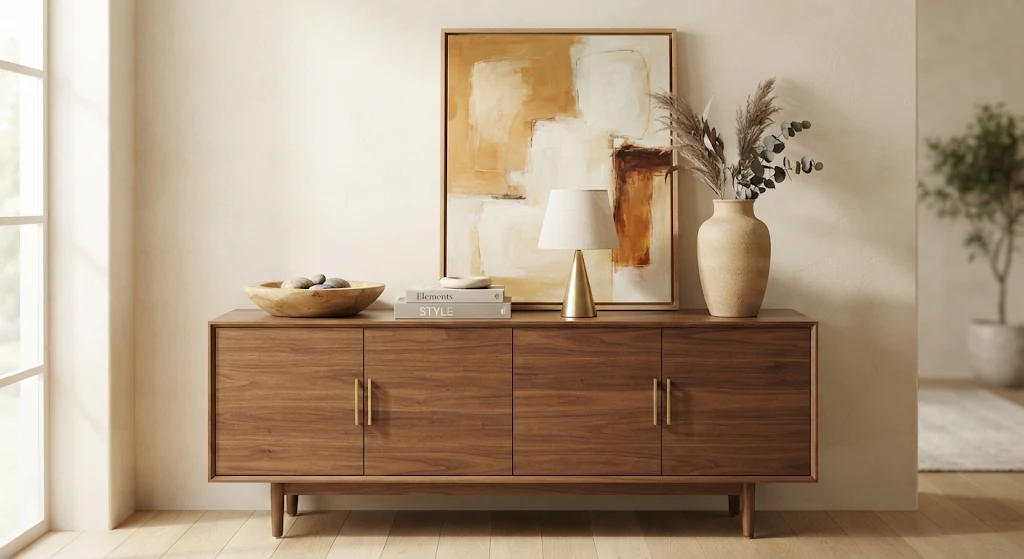
Imagine a sideboard that looks a little bare. Start with a framed artwork leaning against the wall. Add a vase at one side and a low bowl at the other: that gives you a group of three with different heights. If the sideboard is wide, add a small stack of books and a table lamp to make five. Step back before adding anything else. The artwork should still be easy to see, and there should be enough clear surface to use the sideboard. (Homes & Gardens; Ideal Home)
Common 3-5-7 decorating mistakes to avoid
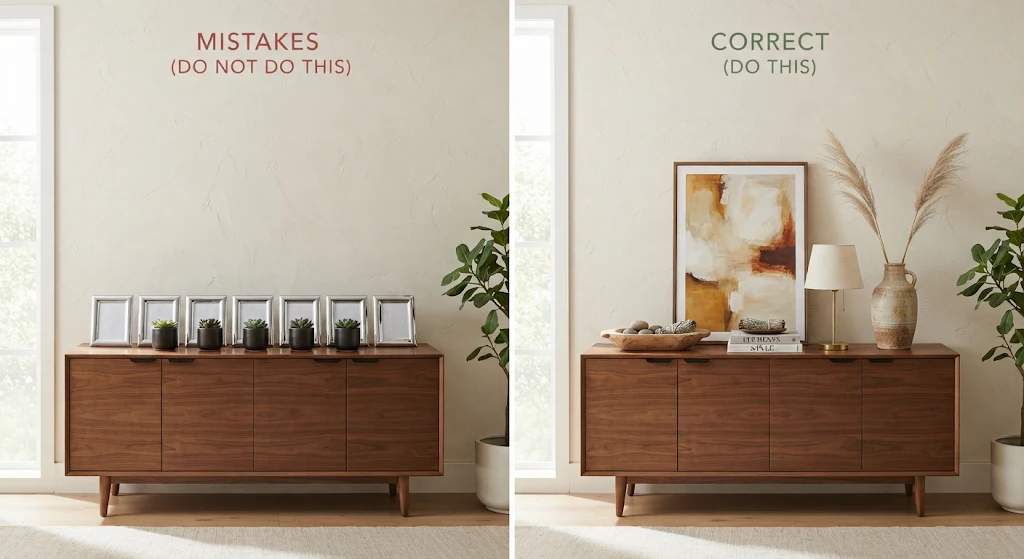
Adding objects just to reach a number. If the display looks finished with three pieces, do not add four more.
Choosing items that are all the same height. Mix tall, medium and low shapes to create movement.
Using too many unrelated colours or materials. Repeat one or two details to give the group a connection.
Pushing everything to the back or lining it up in a row. Try a little overlap and vary the distance from the wall.
Forgetting the room around the display. A busy shelf may need fewer objects, while a large empty console may need a wider arrangement.
Does every room need the 3-5-7 rule?
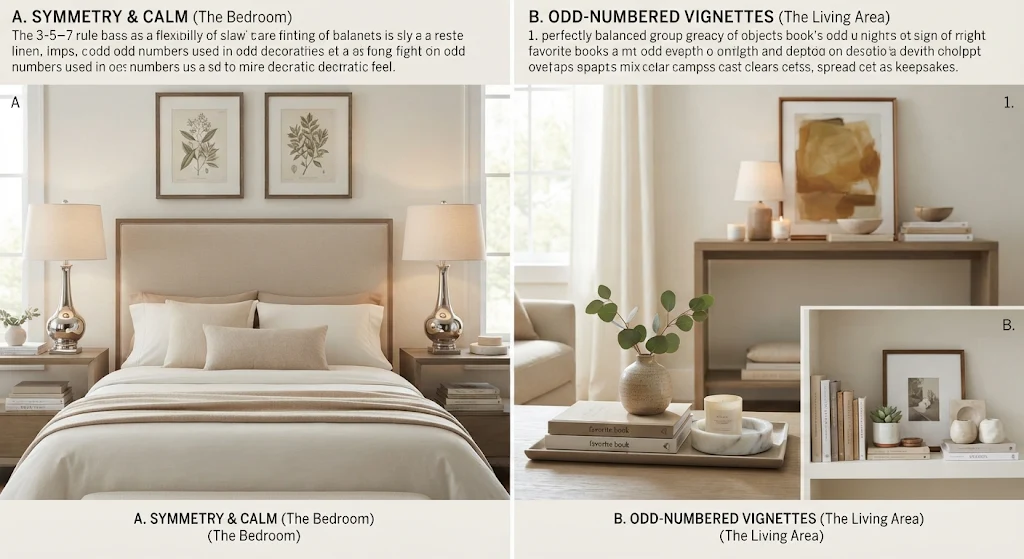
No. It is a flexible styling trick, not a design law. A pair of matching bedside lamps can make a bedroom feel calm and balanced. A row of dining chairs needs to work for the people using the table, not follow an odd-number rule. The 3-5-7 approach is most useful for smaller decorative groupings: shelves, coffee tables, mantels, consoles and collections of pictures. (Ideal Home; Livingetc)
If a surface feels cluttered, remove something before you add anything. If it feels too bare, try a group of three. Then adjust the heights, spacing and colours until the arrangement feels right to you. (Homes & Gardens)
Find artwork that works with your room
A well-chosen painting can bring a styled corner together. Look at the colours and shapes already in your room, then choose artwork that complements them or adds a contrast you enjoy. If you are unsure how a piece will look above your sofa, sideboard or bed, photograph the wall straight on in daylight and upload it to Art For My Room. Explore matched paintings or A3 prints, try your favourites in the room preview and check the listed dimensions before buying. (Art For My Room – Wall Art Size Calculator)
Still choosing a piece? Upload a room photo to preview matched artwork.
Frequently asked questions
Is the 3-5-7 rule the same as the rule of three?
It is an extension of the same idea. The rule of three focuses on arranging three related objects, while 3-5-7 suggests using groups of three, five or seven depending on the size of the display. (Ideal Home; Livingetc)
Can I use the 3-5-7 rule with cushions?
Yes. Try three cushions in different sizes or textures on a smaller sofa, or five across a larger sofa. Repeat a colour or pattern so they feel related, and make sure the cushions are comfortable as well as decorative. (Ideal Home)
Does the rule work for wall art?
It can. Three, five or seven frames can make a gallery wall feel collected rather than rigid. Vary the frame sizes while keeping one connecting detail, and plan the arrangement on the floor before hanging. (Homes & Gardens; Livingetc)
Should I always avoid decorating in even numbers?
No. Symmetry can look elegant and restful. Matching lamps, pairs of chairs and two pictures side by side can all work beautifully. The 3-5-7 rule is simply another option when you want a more relaxed arrangement. (Ideal Home; Livingetc)