

Take a photo from the doorway before you move anything. Notice what catches your eye and think about how you use the room each day. If you always squeeze past a table to get to the sofa, start there. If the room looks bare in the photograph, try giving one wall or shelf something you enjoy looking at.
Move one chair and try the room again
Angle an armchair towards the sofa and move a small table within reach of the seat. If the coffee table gets in the way, move it aside for an evening and try a stool as a side table. Walk your usual route through the room, then sit down and see whether the new layout feels easier to use. (House & Garden on rearranging a living room)

Light the corner you use in the evening
Borrow a table lamp from another room and put it next to the chair where you read or unwind. Sit down and adjust it so it lights the page comfortably. Try a second lamp on a lower table across the room to give the far corner a soft glow. In a bedroom, a small bedside lamp is a good place to test the same idea. (Ideal Home on lighting a small living room)

Pick a colour from something you already own
A favourite mug, throw or old photograph can give you a colour to start with. If you like the blue of a ceramic bowl, set it on a shelf and look for a throw or cushion in a similar shade. Try pieces you already have in daylight and again under the lamps before you buy anything in that colour.

Bring the seating together with a rug
Move the rug back until the front legs of the sofa sit on it. If there’s an armchair beside the sofa, see whether its front legs can sit on the same rug. If you’re choosing a new size, measure how far the rug needs to reach to connect the seats, then check that it leaves room to walk and open the door. (Ideal Home on placing a rug under a sofa)

Add a patterned panel behind one shelf
Measure the back of one open shelf and cut a piece of stiff card to fit it. Wrap the card with a wallpaper offcut or patterned paper, tape the edges on the back and slide it behind the books. Try a small stripe, floral or checkerboard pattern. The panel can lift out when you feel like changing the colour. (Woman’s Day on removable shelf panels)

Make room for daylight at the window
Pull the curtains open and look at how much of the glass the fabric still covers. If there’s space on the existing pole, move the folds to the sides of the window. For a new pole or track, John Lewis suggests extending it about 15–20 cm beyond each side of the window frame where the wall allows. That gives the curtains room to gather. (John Lewis curtain measuring guide)

Make a small display you can change
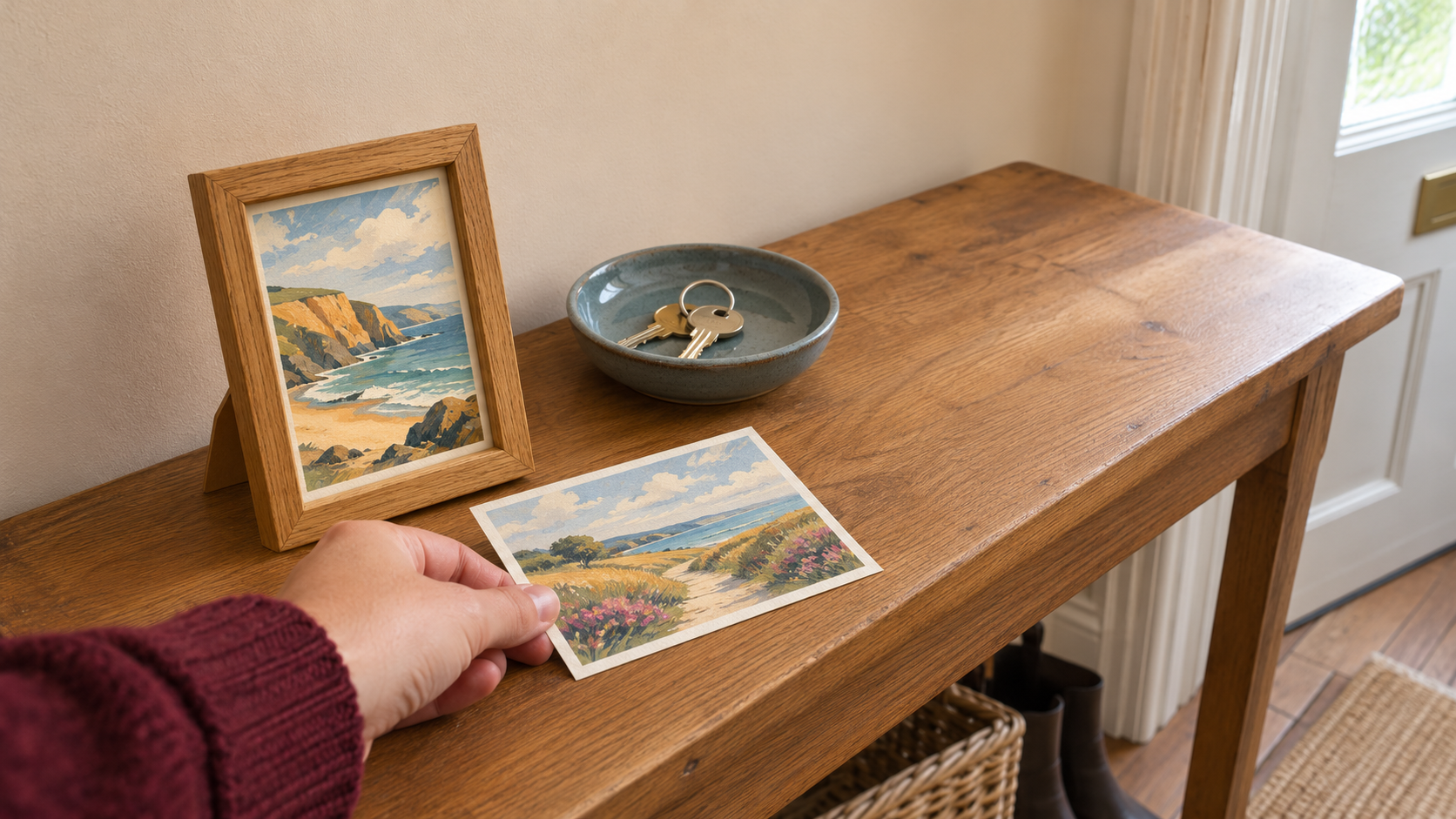
Put a favourite postcard, drawing or photograph in a tabletop frame on a hallway console. Set it beside a low bowl for keys and leave a clear spot to put things down when you come in. A bedside table works too. Swap the picture when you’d like to see something different. In a narrow hallway, a tall painting above the console can use the wall space and keep the surface free for everyday things. (Art for hallway walls)
Preview a painting on the wall you see every day
Once the furniture is where you want it, photograph the wall straight on in daylight with the sofa, bed or sideboard in view. Upload it to Art For My Room and choose Paintings or A3 Prints. Try your matches in the preview. See how a quiet landscape and a more colourful abstract change the feel of the same spot.
When you find a piece you like, work out how much of the wall you want it to fill and check the artwork’s listed size, including the frame. (Wall Art Size Calculator)

Upload a room photo to find and preview artwork for your space.